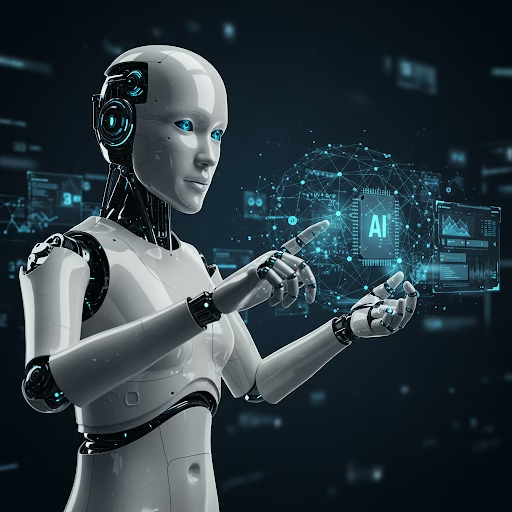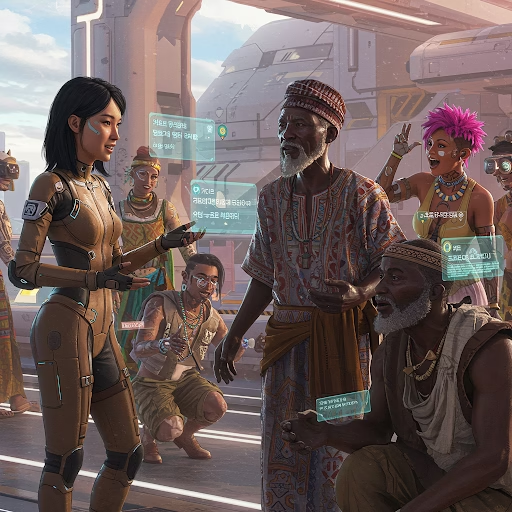
As virtual worlds and metaverse platforms grow, seamless global communication becomes essential. AI-powered real-time language interpretation is revolutionizing how users interact across gaming, social, and business virtual spaces. By breaking down language barriers, AI-driven interpretation fosters collaboration, inclusivity, and deeper engagement within immersive digital environments.
Why AI-Powered Interpretation is a Game Changer
Instant, Accurate Translations – AI models process and translate spoken or written text in real-time, enabling smooth conversations without delays.
Enhanced User Experience – Gamers, remote teams, and virtual event attendees can communicate naturally, regardless of their native language.
Adaptive Learning & Context Awareness – Advanced AI systems recognize regional dialects, slang, and industry-specific jargon, providing contextually accurate translations.
Seamless Integration with Virtual Worlds – AI-powered interpreters work within VR headsets, gaming interfaces, and virtual meeting platforms, enhancing interaction without disrupting immersion.
Also Read: Building Local Mesh Networks for Community Connectivity
How AI Real-Time Language Interpretation Works
1️⃣ Speech-to-Text Processing
- AI listens to spoken words, converts them into text, and identifies the source language.
2️⃣ Neural Machine Translation (NMT)
- Cutting-edge AI models, like Google’s DeepMind or OpenAI’s GPT, translate conversations with near-human accuracy.
3️⃣ Text-to-Speech (TTS) & Subtitling
- The translated text is either spoken by AI-generated voices or displayed as subtitles within the virtual environment.
4️⃣ Personalized Language Models
- AI learns from user interactions, improving translation accuracy over time for better engagement.
The Future of AI-Powered Language Interpretation
With AI-driven translation evolving, real-time multilingual interaction will become a standard in gaming, virtual meetings, and global collaborations. Future advancements could enable emotional tone detection and personalized voice synthesis, making virtual conversations more natural and engaging.
To explore the latest in AI-driven language translation, visit Google AI’s research on neural machine translation.